AI Agent Tool Calling
Demonstrate proper AI Agent tool calling.
→ read more


Data-Centric AI

Machine Learning, Deep Learning, Natural Language Processing

Object Detection, Image Classification

Charles studied mathematics at Wayne State University and later did graduate coursework and research at Portland State University in neural networks, reinforcement learning, and genetic algorithms. His research included evolvable hardware and automated stock trading systems.
Before moving into Data Science, Charles spent over two decades in software engineering. He built iOS, tvOS, and watchOS applications, developed full-stack systems, and worked with companies like Ford Motor Company, Btrieve, Tektronix, Nike, Xerox, and Hewlett-Packard. He shipped ten apps to the App Store and contributed to products like an ODBC driver for Btrieve.
For the past five plus years, Charles has focused on Data Science and Machine Learning. He's built AI agent systems, fine-tuned LLMs, developed computer vision models for cryo-electron microscopy, and tackled NLP problems ranging from topic modeling to contact data cleanup. His work spans PyTorch, scikit-learn, HuggingFace, LangGraph, and vector databases—taking projects from prototypes through production deployment.
Charles grew up in Detroit where he was active in the punk and electronic music scenes. He played guitar and keyboards and built his own guitar pedals. Music remains central to his life—he's an active listener and supporter of WFMU, the legendary freeform radio station, and maintains a collection on Bandcamp.
With his background in mathematics, machine learning, and decades of programming experience, Charles continues to explore new possibilities in Data Science, AI, and Machine Learning.

Charles is a firm believer in the data-centric AI paradigm, which emphasizes the strategic management and optimization of data as the foundation for intelligent decision-making and enhanced model performance. In his work, he prioritizes placing data at the heart of AI development, recognizing that the value of data extends far beyond its quality—it encompasses how well it's organized, how easily it can be accessed, and how effectively it supports the entire machine learning lifecycle.
Quality, Organization, and Accessibility: Charles maintains that well-curated, high-quality data is far more valuable than sheer volume, but quality alone is insufficient. Data must be systematically organized with clear schemas, consistent naming conventions, and logical hierarchies that make it intuitive to navigate. Equally important is accessibility—ensuring that data pipelines are robust, that datasets are properly versioned and documented, and that teams can retrieve the right data at the right time without friction. This holistic approach to data management transforms raw information into a strategic asset..
Strategic Curation and Alignment: By focusing on relevance and alignment with specific project goals, Charles ensures that the AI models he builds are not only accurate but also adaptive, evolving with each new data point to continuously improve performance. This means implementing systematic processes for data collection, validation, and enrichment that scale with the organization's needs while maintaining governance and compliance standards.
Business Impact Through Data Excellence: This comprehensive approach to data management underpins his commitment to creating robust, reliable solutions that deliver tangible business impact. When data is both high-quality and well-managed, models become more interpretable, maintenance becomes more efficient, and the path from experimentation to production becomes significantly smoother.
Charles has 5+ years of experience in data science and machine learning, supported by 25 years of software engineering. His work covers the full project lifecycle from data exploration and modeling through production deployment. He's built solutions using PyTorch, scikit-learn, TensorFlow, and the standard data science stack including Pandas, NumPy, and Matplotlib.
He's developed classification models for email engagement detection with Snowflake dashboards for production monitoring, analyzed agricultural datasets to assess market viability for new business initiatives, and built XGBoost models using 3D body scan measurements for clothing size recommendations. He's also designed PostgreSQL databases for metadata management and implemented MLflow as a standardized framework for model development and deployment.
Charles has worked on NLP projects spanning topic modeling, information extraction, and text classification. He designed a contact cleanup system that combined traditional NLP techniques, table lookup, and LLM fine-tuning to demonstrate feasibility for production deployment.
He conducted topic modeling on reviews of herbal remedies that reduced analysis time from days to hours. He's also applied NLP methods to extract structured information from unstructured text in large government datasets, making them more usable for downstream analytics.
His NLP work uses tools including spaCy, Sentence Transformers, and Gensim, focusing on practical applications that solve specific data problems.

Charles solved a Cryo-EM object detection problem using transfer learning, which removed a bottleneck in product development. He then designed an automation system for Cryo-EM data acquisition and implemented K-nearest neighbors optimization for multi-image target acquisition, reducing acquisition time significantly.
He's also built image classifiers for various applications, including a kaggle competition where he placed 22nd in kitchenware classification. His computer vision work uses PyTorch, TensorFlow, OpenCV, and Scikit-Image, with Albumentations for data augmentation.
He designed and managed implementation of a semi-supervised learning system that reduced annotation time from days to hours.
Charles has worked with large language models through OpenAI API, HuggingFace, and Ollama. He fine-tuned LLMs using QLoRA and LoRA for domain-specific applications including email sequence generation. He's implemented RAG (Retrieval-Augmented Generation) systems using vector databases including pgvector, Chroma, and FAISS.
His generative AI work focuses on practical applications: fine-tuning models for specific tasks, implementing effective prompting strategies, and integrating LLMs into larger systems.
Charles has built multi-agent systems using LangGraph. He developed a customer segmentation system where AI agents parsed user queries and automated form completion. The system used a vector database, prompt engineering, and multiple specialized agents. He containerized it with FastAPI and worked with engineering to deploy it to Kubernetes.
He also built BaristaBot, a cafe ordering system demonstrating AI agent workflows with LangGraph and FAISS. His AI agent work emphasizes practical system design: handling state management, coordinating multiple agents, and creating deployable systems.
Demonstrate proper AI Agent tool calling.
→ read more

Health Resource AI Agent
→ read more

AI-Powered Cafe Ordering System
→ read more
Multi AI Agent system that parsed user queries and produced marketing segments.
→ read more

AI Agent to automate marketing email sequencing.
→ read more
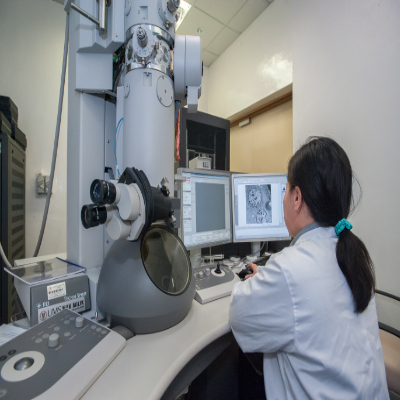
Utilized neural networks to automate electron microscope targeting and image acquisition.
→ read more

Neural network based image classification system.
→ read more

Neural network based object detection system to identify emergency devices in images.
→ read more

Located trees using an iPhone camera and mapped the tree's GPS coordinates.
→ read more

Machine learning based spam filter detection system.
→ read more
Machine learning based clothing size recommendations using LiDAR measurements.
→ read more

Iris species classification using machine learning.
→ read more

Fuzzy logic based email delivery optimization system.
→ read more
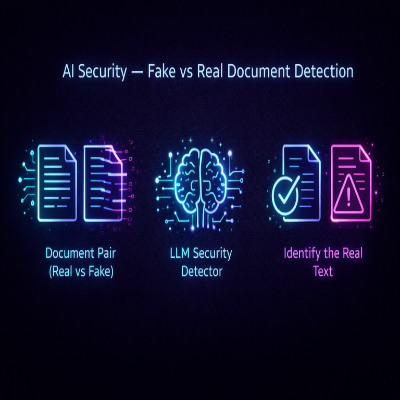
Fake or real text detection competition.
→ read more
Maven NLP in Python course projects.
→ read more
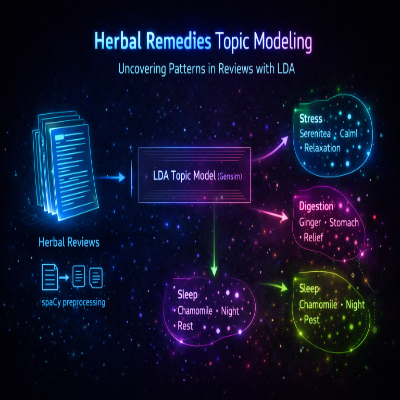
Applied topic modeling to herbal remedy reviews to determine their medicinal effects.
→ read more
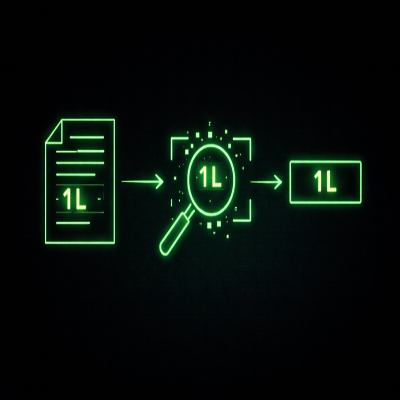
Used spaCy to extract quantity data from product names and descriptions.
→ read more

Evaluated the feasibility of establishing a waste collection and fertilizer production business.
→ read more
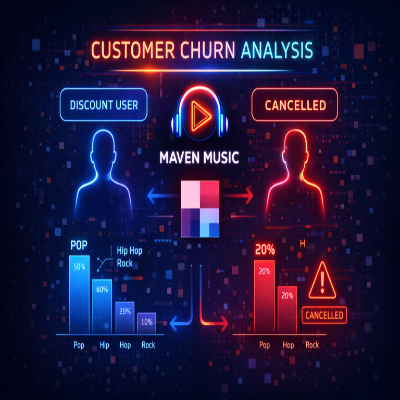
Customer churn data analysis
→ read more
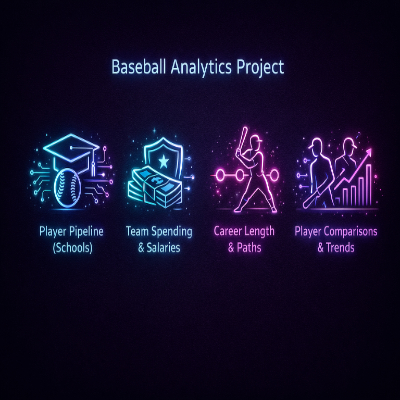
Baseball player analysis using SQL.
→ read more
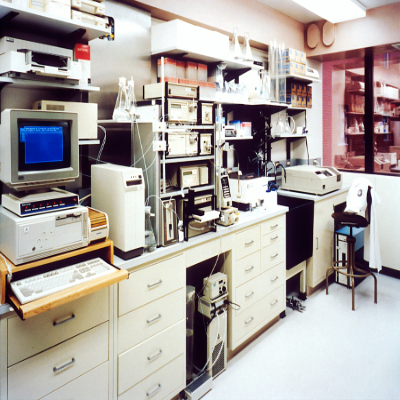
Parsed the output from laboratory equipment for downstream use in a web application.
→ read more

Messy dataset analysis and cleaning.
→ read more