
Agricultural Waste Analysis
Evaluated the feasibility of establishing a waste collection and fertilizer production business.
→ read more


I’m a senior data scientist with a background in mathematics and graduate research in neural networks, reinforcement learning, and evolutionary computation. I earned my mathematics degree at Wayne State University and completed graduate-level research at Portland State University, where my work included genetic algorithms, evolvable hardware, and automated trading systems.
My work focuses on applying data science and machine learning in environments where data is incomplete, contaminated, biased, or poorly documented—which, in practice, describes most real-world systems. Over the past several years, I’ve led and contributed to projects spanning production machine learning, applied NLP, computer vision, and AI agent prototypes, with an emphasis on feasibility, data quality, and measurable impact rather than novelty for its own sake.
I take a data-centric approach to AI. In my experience, model architecture is rarely the limiting factor; the harder problems lie in how data is collected, structured, validated, and maintained over time. Much of my work involves diagnosing data pathologies, determining what level of accuracy is realistically achievable, and designing workflows—annotation strategies, validation methods, and monitoring plans—that make constraints explicit rather than hidden. This has included separating legacy and current records in contaminated datasets, building extraction pipelines for heterogeneous text data, and establishing quality controls for production ML systems.
I’ve led the development of customer-facing machine learning systems, including classifiers that distinguish human behavior from automated activity and decision systems for email delivery optimization under strict reputational constraints. I’ve also designed and evaluated AI agent prototypes for customer segmentation, adaptive email sequencing, and structured information retrieval—not as demonstrations, but as feasibility exercises to determine when agentic approaches are warranted and when simpler methods are more appropriate.
A consistent part of my role has been bridging technical and business contexts. I regularly write technical assessments and white papers to help product and leadership teams understand tradeoffs, risks, and long-term maintenance costs associated with ML systems. In several cases, this work has led to deliberate decisions not to deploy AI solutions when data limitations or operational constraints made them impractical.
My background includes applied research and scientific computing. I’ve worked on computer vision models for cryo-electron microscopy to automate expert selection tasks, reducing manual review time from hours to minutes, and on feasibility studies across domains such as agricultural analysis and biometric classification—projects where identifying fundamental constraints was as important as building models.
I grew up in Detroit and was active in the punk and electronic music scenes, playing guitar and keyboards and building my own effects pedals. Music remains central to my life; I actively support WFMU, the legendary freeform radio station and maintains a collection on Bandcamp. Years of listening to and creating music—recognizing structure, variation, rhythm, and breakdowns within noisy systems—shaped how I approach data science. The same instincts that help you hear when a track is about to resolve or collapse are useful when working with data: noticing patterns that don’t belong, understanding how components interact, and distinguishing signal from texture and noise.
Across my work, I’m most interested in applying judgment—knowing what questions to ask of data, what methods are appropriate, and where the limits truly are. Tools and models matter, but they’re secondary to clarity, evidence, and an honest assessment of what the data can support.
Evaluated the feasibility of establishing a waste collection and fertilizer production business.
→ read more
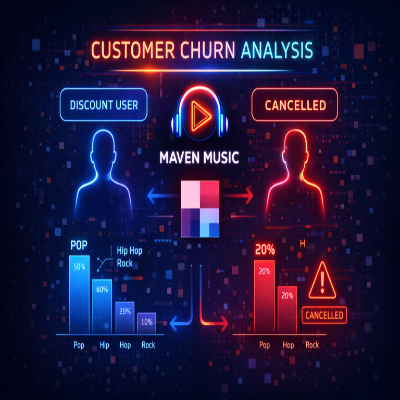
Customer churn data analysis
→ read more
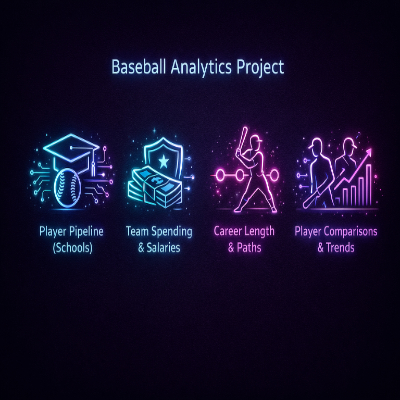
Baseball player analysis using SQL.
→ read more
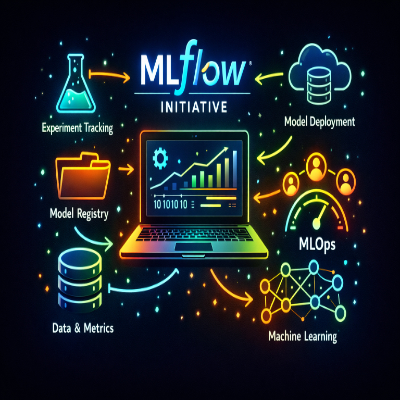
Championed the use of MLFlow for experiment tracking and model serving.
→ read more
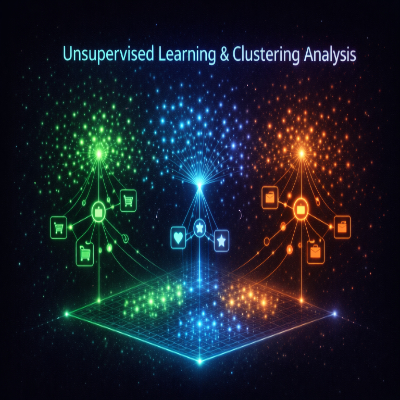
Unsupervised Learning Projects.
→ read more

Messy dataset analysis and cleaning.
→ read more

An introduction to Pandas
→ read more
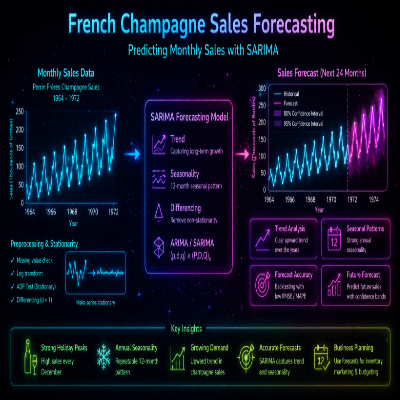
Time Series Forecasting for French Champagne Sales
→ read more

Machine learning based spam filter detection system.
→ read more
Machine learning based clothing size recommendations using LiDAR measurements.
→ read more

Iris species classification using machine learning.
→ read more

Fuzzy logic based email delivery optimization system.
→ read more
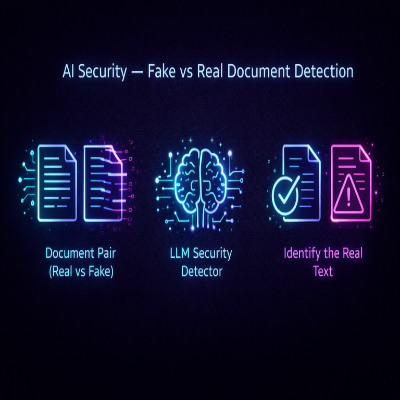
Fake or real text detection competition.
→ read more
Maven NLP in Python course projects.
→ read more
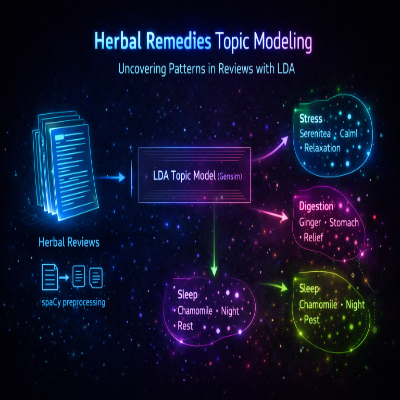
Applied topic modeling to herbal remedy reviews to determine their medicinal effects.
→ read more
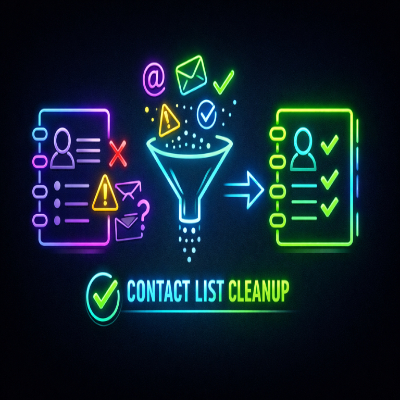
Customer contact list cleaning
→ read more
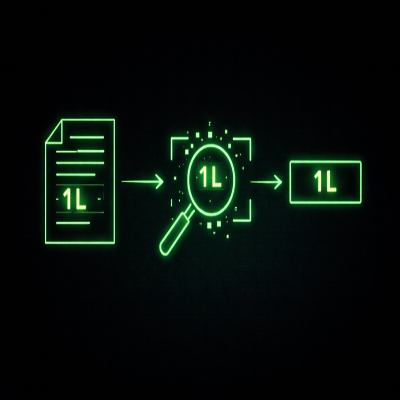
Quantity data extraction from product names and descriptions.
→ read more
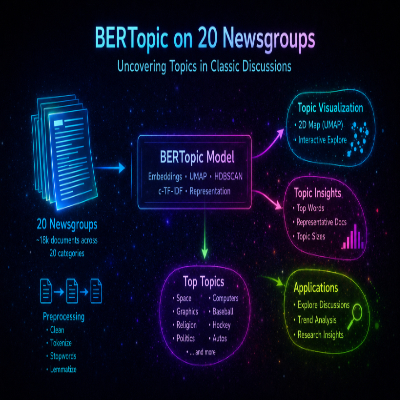
Topic modeling using Bertopic on the 20 Newsgroups dataset.
→ read more
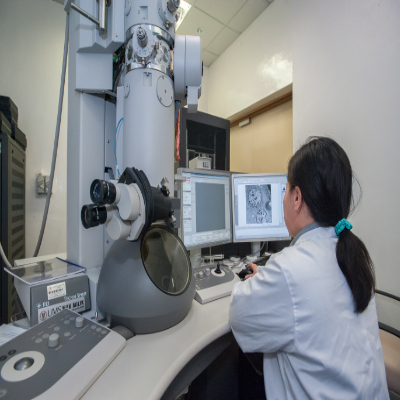
Utilized neural networks to automate electron microscope targeting and image acquisition.
→ read more

Neural network based image classification system.
→ read more

Neural network based object detection system to identify emergency devices in images.
→ read more

Located trees using an iPhone camera and mapped the tree's GPS coordinates.
→ read more
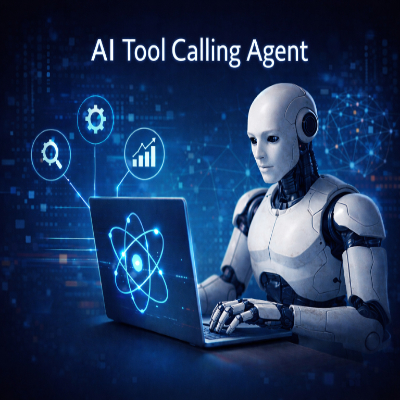
Demonstrate proper AI Agent tool calling.
→ read more

Health Resource AI Agent
→ read more
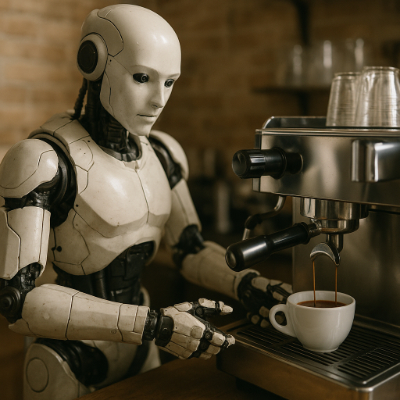
AI-Powered Cafe Ordering System
→ read more
Multi AI Agent system that parsed user queries and produced marketing segments.
→ read more

AI Agent to automate marketing email sequencing.
→ read more